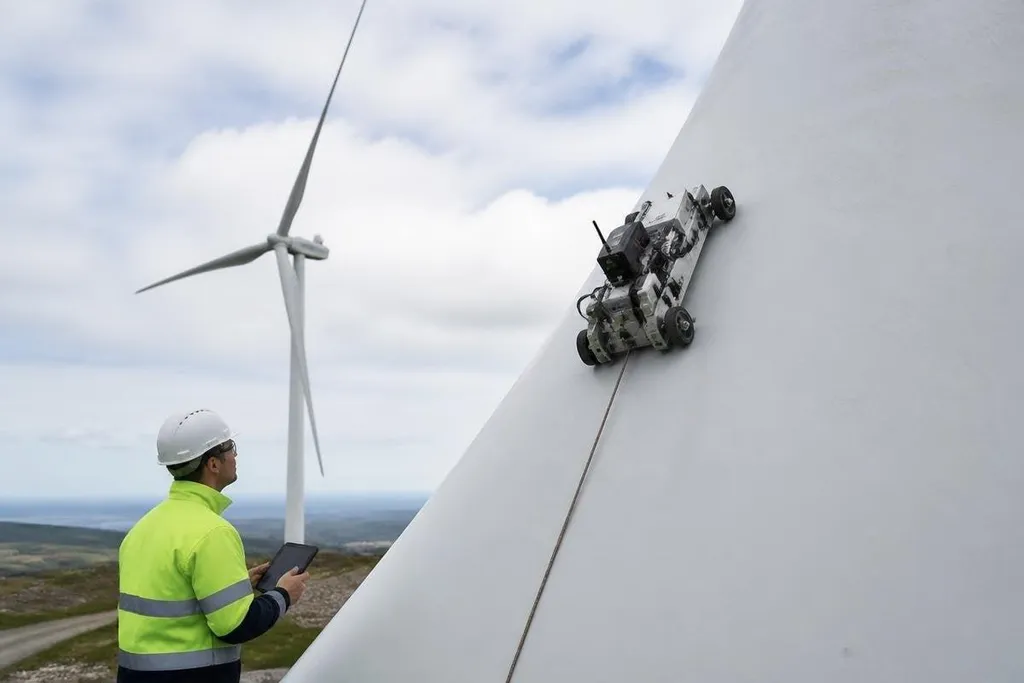
A wind turbine blade can stretch far above the ground, so checking it often means ropes, lifts, or long drone flights. Robots can move cameras and sensors closer to the surface, but the same machines add new failure points around people, weather, and power equipment.
- Robots can inspect blades, towers, and some internal spaces without sending a worker across the full structure.
- Cameras find surface damage; other sensors can check defects that a normal image may miss.
- Wind, rain, poor contact, and weak data links can turn a planned inspection into a recovery job.
Where robots help
A robot can carry an inspection camera along a blade or tower while a technician stays on the ground. That reduces time spent climbing or hanging from a rope, especially when the work area is high, narrow, or difficult to reach with a lift.
The robot may also repeat the same route on later visits. Matching images from two inspections can help a team see whether a crack, coating fault, or damaged edge has changed. The value comes from a usable record, not from the robot moving by itself.
Drones take a different route. They can fly around a blade and collect images without touching it. Crawling robots use wheels, magnets, suction, or cables to stay close to a surface, which can help them collect steadier images and sensor readings.
What the sensors can find
A camera can record missing coating, cracks, lightning marks, loose parts, and damage near a blade edge. Thermal cameras may show heat differences around electrical parts, while ultrasonic sensors can check inside some materials for faults that do not appear on the surface.
Each method has limits. A camera needs a clear view and enough light. A thermal image needs the right weather and a good reason for the temperature difference. An ultrasonic sensor needs correct contact and a technician who knows how to read the result.
That is why a robot should gather evidence for a qualified inspection team. It does not turn every unusual image into a repair decision.
Poor image quality, a dirty blade, or a sensor held at the wrong angle can lead to a false alarm or a missed fault.
The risks around the machine
Wind is the first concern. A drone can drift near a blade, while a climbing robot can lose contact with a wet, dirty, or damaged surface. A dropped machine can harm people, damage the turbine, or remain high on the structure until someone retrieves it.
The turbine itself adds hazards. Inspection may happen near moving blades, electrical equipment, stored mechanical energy, and sudden changes in weather. A robot still needs a work plan, exclusion zone, emergency stop method, and clear control of the turbine.
Data creates another problem. Inspection images can be large and may need a strong radio link or storage on the robot. A lost connection should leave the machine in a known safe state. If the system cannot do that, a technician may face a recovery task in the same place the robot was meant to make safer.
An inspection robot may reach a blade, but the maintenance team still needs to know whether it found the right faults. A report from Robot24.com can name the robot, blade section, test date, sensor, and measured result. Those details give a buyer a better basis for judging the work before the next section compares cost with inspection quality.
Cost and work quality
Robots may cut rope access, lift rental, or downtime for some inspections. They also bring purchase costs, software fees, training, battery care, transport, and repairs. A small inspection team may spend less on a contractor than on owning a robot that flies or crawls only a few times each year.
The output must fit the operator's records. A useful system should attach images to a blade location, keep the inspection date, mark sensor settings, and let a technician compare new findings with older ones. A folder of unnamed images does not make maintenance easier.
The strongest case is a repeated task with a clear safety burden. The weakest case is a one-off inspection where the team needs a specialist robot, a special permit, and a trained operator before work can start. I'd choose the robot only when its records and safety plan are better than the current inspection method.
A practical buying check
Before a wind farm buys or hires a turbine inspection robot, check these points:
- Surface fit: Confirm that the robot works on the blade, tower coating, or internal space you need to inspect.
- Weather limits: Record the allowed wind, rain, temperature, and visibility before booking field work.
- Recovery plan: Ask how the team retrieves the robot after a lost link, low battery, or loss of contact.
- Data format: Check that images and sensor readings connect to the turbine, blade section, and inspection date.
- Human review: Name the person who accepts, rejects, or sends a finding for closer inspection.
- Full cost: Add training, transport, software, repairs, and turbine downtime to the robot's purchase or hire price.
Wind turbine robots make the most sense when they reduce exposure to height and collect repeatable records. Their next test is practical: can operators use those records to make faster repair decisions without adding a new rescue task above the ground?